Choose a haircut by comparing where its outline ends, where it carries volume, and how it behaves with your hair. Face shape can help describe the effect, but your preferred length, texture, and daily routine should guide the shortlist.
By the end, you can bring two possible cuts and a few specific questions to a stylist. A photo may help you describe visible proportions; it cannot tell you how your hair falls when dry, how much styling you enjoy, or which look you prefer.
Start With the Change You Want
Name the change before naming a cut. You might want to keep enough length to tie your hair back, change the line beside your face, or try a shorter overall outline. Each goal gives you something concrete to compare in photos and at a consultation.
If you want a face-shape reference, first describe your visible proportions. Treat that description as one input: camera angle, expression, and a covered hairline can change what a photo shows. Your texture, routine, and preferred result come from you, not from the image. A professional haircut guide also notes that texture and daily routine affect how manageable a style feels; it does not identify a single cut for an individual.
Choose a Practical Constraint First
Suppose you need to tuck your hair behind your ears at work. Check whether the shortest pieces in a reference allow that before deciding you want a “bob” or a “pixie.” A useful shortlist respects the way you actually wear your hair.
Compare Length, Outline, and Volume
Look at the perimeter (the outer line formed by the ends), the point where hair looks fullest, and the line nearest your face. These are options to discuss, not cuts assigned to particular face shapes.
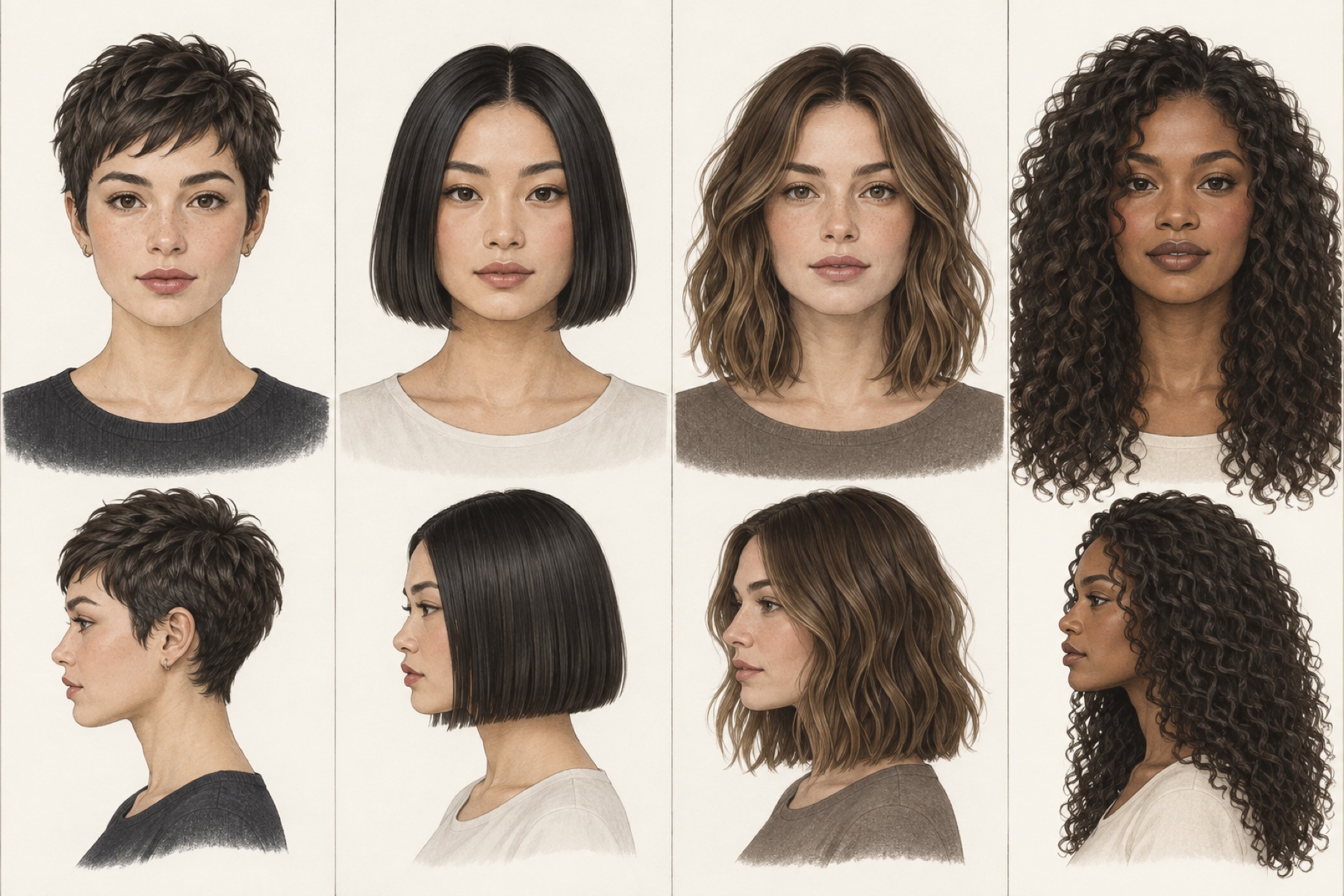
| Cut to compare | Length landmark | Outline and volume to inspect | Ask about upkeep |
|---|---|---|---|
| Cropped or pixie cut | Above or around the ears | Where the shortest edge sits and whether fullness is at the crown or sides | How will it look after your usual drying method? |
| Bob | Around the chin | Whether the end line is blunt or soft and where it meets the jaw | Will you need to reset the front pieces each morning? |
| Lob (long bob) | Around the collarbone | How the ends sit on or beyond the shoulders and where side volume falls | Can you still tie back the length you need? |
| Long layers | Below the shoulders | Where the shortest layer starts and how the ends make the full outline | What happens when you air-dry or skip a styling tool? |
If a shape name helps you compare visual effects, use the relevant row below. These are prompts for what to notice, not rules or promised results. Use the shape-specific guides in the table and the face-shape descriptions to compare visible outlines.
| Visible description | Detail to compare in two cuts | Dedicated guide |
|---|---|---|
| Round | A curved lower contour beside a straight or curved hair perimeter | Compare bobs and short cuts for round faces |
| Square | A visible jaw angle beside a blunt or softer end line | Compare defined and textured cuts for square faces |
| Oval | A gently tapered outline with different placements of side volume | Compare length, texture, and routine for oval faces |
| Heart | A wider upper outline and where front pieces end | Compare framing and endpoints for heart-shaped faces |
| Oblong | A longer visible outline and where a cut places its strongest horizontal line | Compare side volume, length, and bangs for oblong faces |
| Diamond | A wider cheekbone area and where the hair looks fullest | Compare cheekbone framing and open sides for diamond faces |
Repeat a Line or Try a Contrast
You may enjoy a curved cut that echoes a rounded contour, or a graphic, straight edge that contrasts with it. Both are valid design choices. Compare the actual perimeter and volume in each reference; there is no feature you must hide or “correct.”
Check Your Texture and Dry Length
Texture describes whether hair falls straight, wavy, curly, or coily. Density is how much hair grows across the scalp, while strand thickness describes an individual hair. Those different inputs can change how a cut looks and how you style it. The professional source above discusses texture and density as practical considerations, not as a way to prescribe a cut to everyone with the same pattern.
Ask your stylist where the shortest and longest pieces will sit in your hair’s ordinary dry state. Show how your hair falls without a special finish, and explain whether you normally air-dry, diffuse, blow-dry, or use a hot tool. Ask how the proposed layers will preserve the dry silhouette you want. If you are considering many layers, discuss whether that amount of layering supports your outline; “over-layering” is a consultation question, not a universal prohibition.
Use References That Match Your Starting Point
Look for references with a texture and current length reasonably close to yours, then bring more than one angle if possible. A salon-finished image can show an idea for a perimeter, but it cannot promise the same shape after your usual wash and dry routine.
Make Upkeep Part of the Comparison
Compare the actions each option asks of you, rather than assuming that shorter or longer automatically means easier. Fill in this small worksheet with a stylist using your own hair and routine.
| Routine question | Option A | Option B |
|---|---|---|
| After washing | How will you dry or shape it? | How will you dry or shape it? |
| Each morning | Which pieces might need resetting? | Which pieces might need resetting? |
| Without your preferred tool | Does the outline still suit your goal? | Does the outline still suit your goal? |
| As it grows out | When would the line interfere with your routine? | When would the line interfere with your routine? |
Describe what “easy” means for you: wash-day effort, a morning reset, heat styling you are willing to do, and when you would want a trim. That list gives your stylist more to work with than “low maintenance,” which can mean very different things to different people.
Ask About the Grow-Out Stage
For a short perimeter or bangs, ask how you could wear the intermediate length. Could you tuck it back, change your part, or use a clip while it grows? The answer depends on the cut and your hair; a universal growth timetable will not help you choose.
Build a Two-Option Salon Brief
Bring two references that show genuinely different directions and use this card to explain what matters. Here is a comparison example:
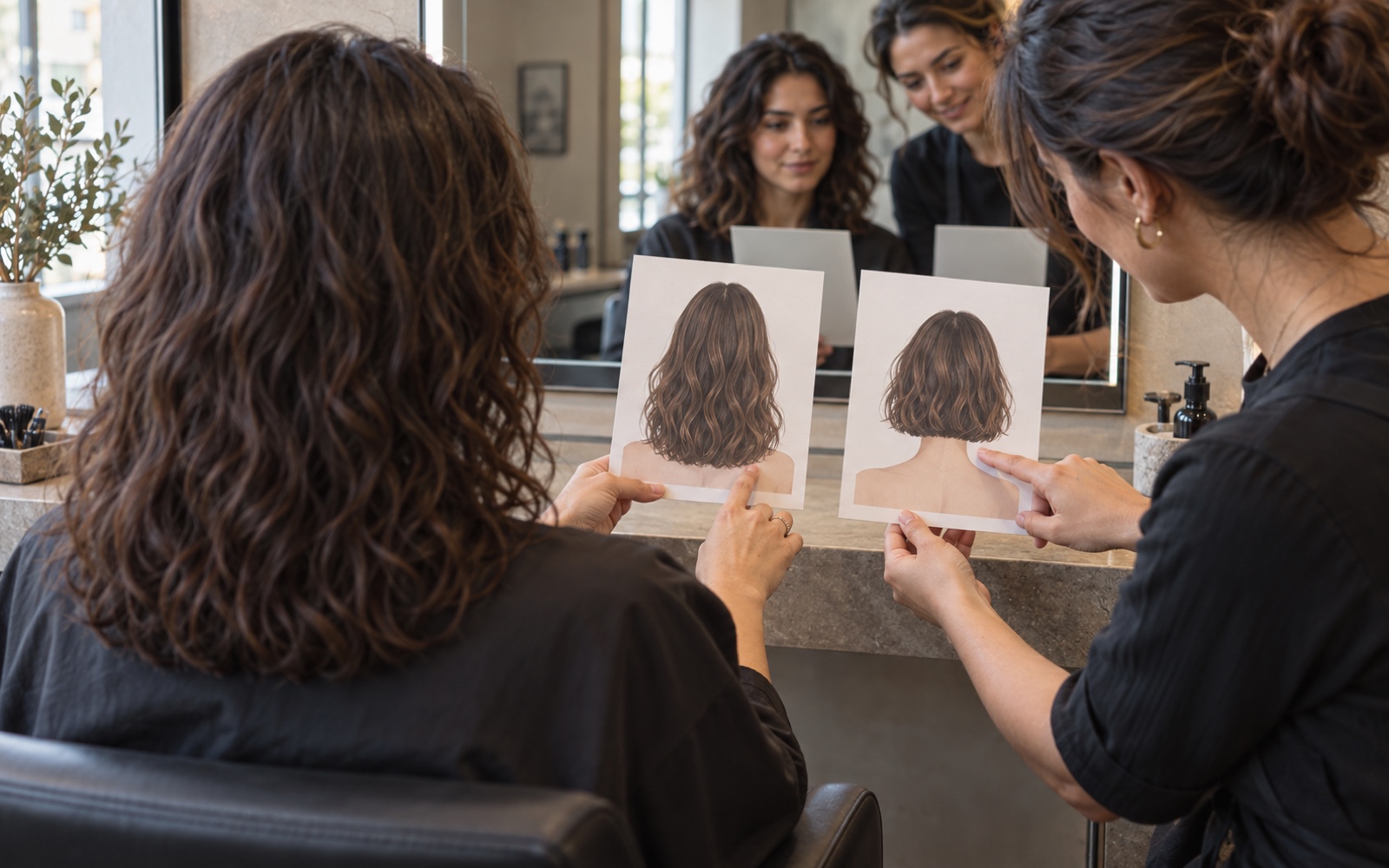
| Salon brief field | Example |
|---|---|
| Current dry length | Just below the shoulders |
| Preferred outline | One option near the collarbone; one shorter bob |
| Texture | Wavy, with a fuller side on most days |
| Routine | Usually air-dries; can do a brief morning reset |
| Two references | One collarbone outline and one chin-length bob, each shown from front and side |
| Concerns or constraints | Wants enough front length to tuck behind the ears |
Ask the stylist to explain how each reference would differ on your current hair, especially the dry length and daily routine. If a fringe is part of either option, compare bangs separately and bring a fringe reference. The face shape analyzer homepage collects the available guides, but photo analysis is not available in this preview.
What to Ask Before Cutting
Ask three direct questions: Where will the shortest part end on my dry hair? How is each option likely to fall after my normal drying routine? If I need to tie my hair back or tuck it away, which pieces will still reach? Use the answers to choose between your two options, or adjust the references together.
Questions About Choosing This Haircut
Does a face shape rule out short hair?
No. Compare the short cut’s actual outline, the upkeep it asks of your hair, and whether you like the result. A shape label does not ban a length.
What if I cannot identify my shape?
You can still describe the jaw line you see, your preferred length, and where you want volume. Those observations are enough to start comparing cuts without forcing a label.
Compare your two options: use the visible shape descriptions from the comparison table, then bring your two references and salon brief to a stylist.