An oblong outline does not require you to shorten your hair or hide your forehead. Compare side fullness, a longer vertical outline, and different fringe shapes as optional effects. Keep the direction that fits your taste, texture, and routine.
Use this guide to shortlist two looks and prepare a useful note for your stylist. Your hair’s usual dry texture, how much effort you want to spend, and your preferred length are inputs you provide; a face outline alone cannot supply them.
Decide Whether You Want Width, Length, or Both
“Oblong” is a working name for a visible outline that looks relatively long. It does not require a numeric cutoff. The lower contour might look rounded or angular, and either detail is worth describing separately. If a photograph changes that impression because of its angle, focal length, expression, or covered hairline, keep the label tentative and describe your face proportions before using it as shorthand.
Choose the hair effect you want to explore: more fullness at the sides, a longer vertical line, or some of each. You may like a shoulder-length cut with waves beside the cheeks or a longer, closer outline. These are visual choices to compare, not a task to make your face appear shorter.
Separate Face Length From Hair Height
Fullness at the crown changes the hair silhouette above the head; it does not change the length of the face itself. When comparing references, look at the visible face and the hair outline separately. If the face outline is hard to see, use the proportions guide rather than assigning a shape from the hairstyle.
Compare Side Fullness With a Closer Outline
At the same haircut length, waves set out toward the sides create a fuller outline near the cheeks; hair styled closer to the head creates a narrower, more vertical line. Compare where the hair looks fullest while keeping the face, pose, and length constant. Neither arrangement is a ranking. You can compare haircut options across other lengths and routines in the general guide.
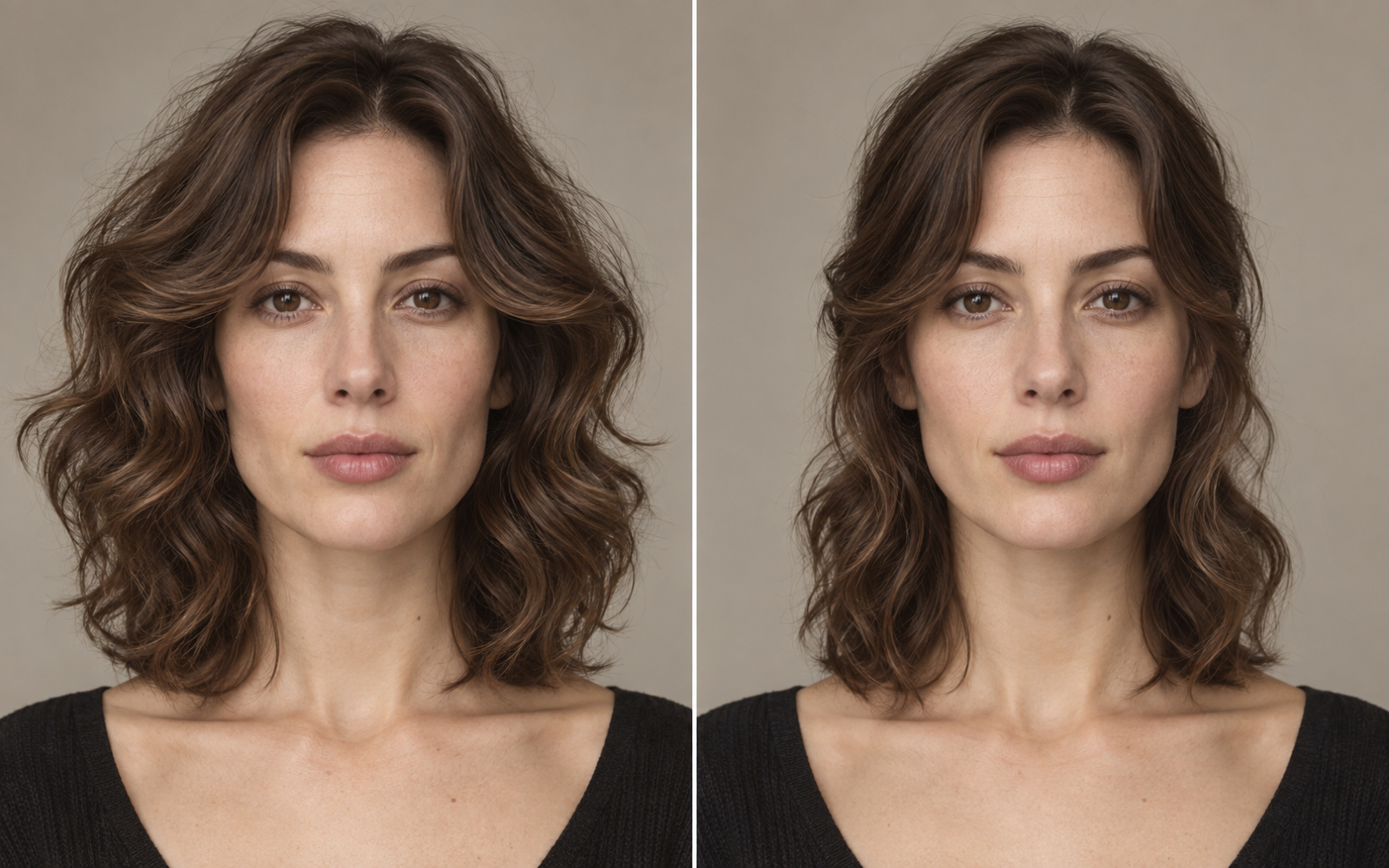
Your waves or curls may naturally settle in a different place from the illustration. Compare them after your usual drying routine, and ask whether the version you like can be worn with the styling steps you actually want to repeat. Daily heat styling is not a requirement attached to a face-shape label.
For a concrete shortlist, compare a layered shoulder-length outline with visible side fullness and a longer cut that falls closer to the face. The difference to discuss is where the hair carries fullness, not whether one option corrects the face. A professional haircut discussion offers side volume and fringe as oblong-face ideas; use them as options to inspect alongside your texture and preferences.
Use a Dry-Hair View
Find a reference showing the result after the hair dries, preferably from the front and side. Wet length can obscure where waves finish and where the outline becomes fullest. A dry reference helps you discuss the visible silhouette, though it cannot promise that the same cut will fall identically on your hair.
Long Hair Remains an Option
Long hair can form a continuous line below the shoulders. Long hair with shorter front pieces keeps the overall length while changing the line near the face. Either can emphasize a vertical silhouette if that is what you enjoy. There is no oblong-face rule that forbids hair below the shoulders.
Compare the two directions using the same practical questions. A long reference may show a polished finish, so ask how the line will look on your own hair after washing.
| Check | Continuous long line | Long line with front pieces |
|---|---|---|
| Front line | Notice where the full length begins beside the face. | Mark where the shortest front piece ends. |
| Side view | Check how closely the length falls along the sides. | Check whether the front pieces change that side outline. |
| Hair gathered back | Ask if the full length reaches your preferred tie-back. | Ask whether the shorter front pieces stay in or fall free. |
| After washing | Describe how the length normally dries. | Ask what the front pieces need to sit as shown. |
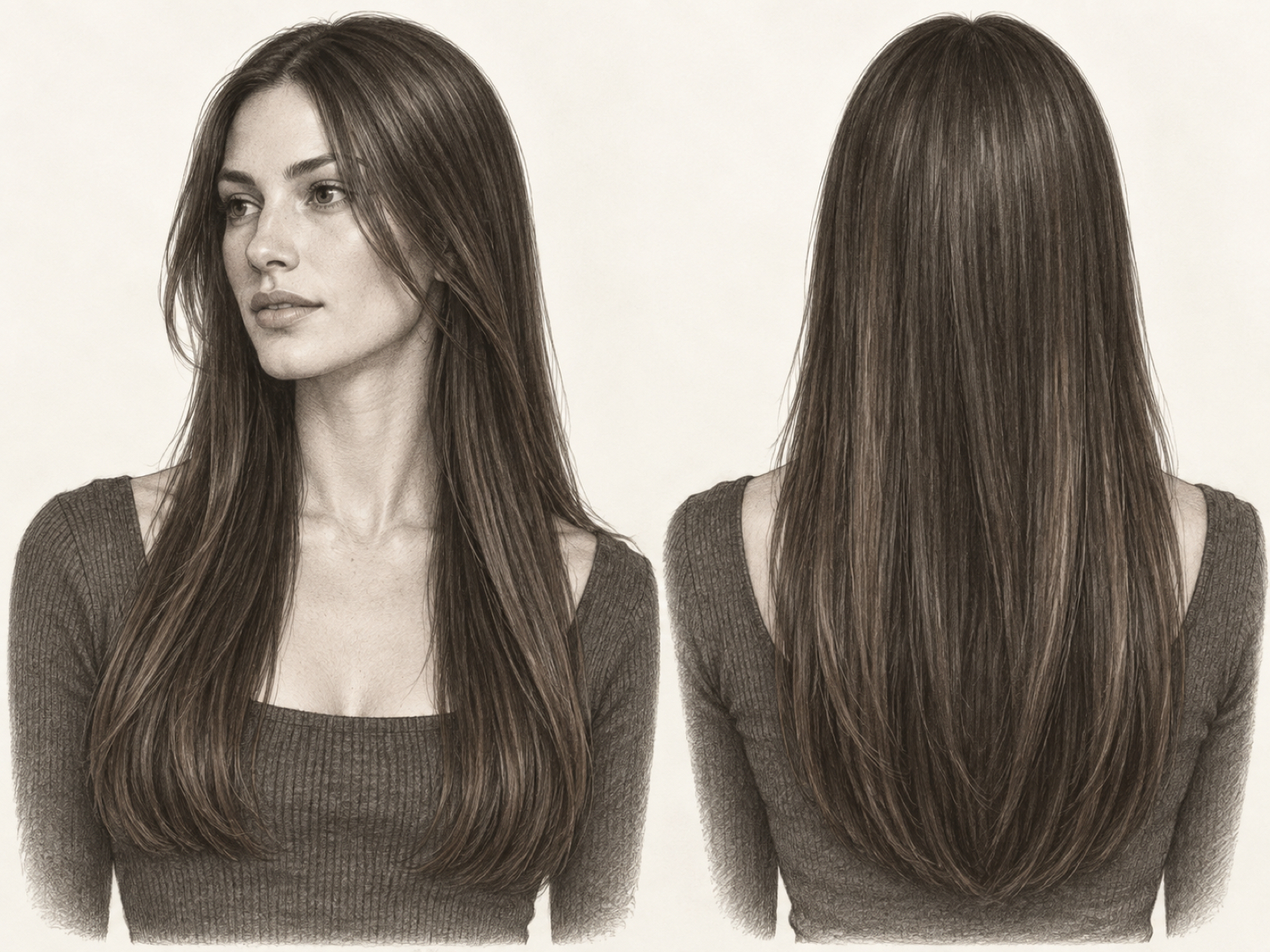
Discuss the Front and Back Separately
Point to the front pieces and the longest back edge in separate views. Tell your stylist which length you want to keep and where you would like the front to end on your dry hair. A single “long layers” label does not specify both endpoints.
Compare Fringe Coverage and an Open Forehead
A solid brow-level fringe creates a continuous line across part of the forehead. A parted fringe leaves a gap that shows more of the center, while an open forehead leaves the hairline visible. Compare these as changes to the front hair outline, not as an obligation for an oblong face. Use the bangs comparison guide to compare fringe options separately.
Ask how your front hair naturally grows, whether the fringe would meet your glasses, and whether you want to reset it after sleeping or washing. The amount of forehead shown may matter to your taste; no one effect is guaranteed for every person with the same face-shape description.
Keep the Fringe Decision Reversible Where Possible
Collect references for the coverage you like and try arranging your current front pieces across or away from your forehead. That trial can clarify a preference, but it is not an exact preview of freshly cut bangs or how they will grow out.
Choose the Routine You Can Repeat
Compare the desired silhouette with the way your hair normally dries. Note your texture, density, current dry length, and whether you air-dry, diffuse, or style the front. Write down the steps you are willing to repeat. Those details help turn a picture into a useful salon conversation.
Bring two references: one with more side fullness and one with a closer, more vertical outline. Tell your stylist which front and back endpoints you prefer, whether you need to gather your hair, and which routine feels realistic. Ask how your particular hair might change each reference. The face shape analyzer homepage collects the current guides; photo analysis is not available in this preview.
Do Not Promise Permanent Volume
The fullness in an illustration shows one arranged moment. It does not establish that your own hair will hold that shape all day. Ask what the cut and your usual styling could reasonably support, then choose the outline you would still enjoy on an ordinary day.
Questions About Choosing This Haircut
Can an oblong face wear long hair?
Yes. If you prefer a long line, keep it among your options and discuss the front pieces, dry length, and routine you want.
Are bangs necessary?
No. Compare how much forehead you want visible with the upkeep you would accept for a fringe; an open forehead is also an option.
Compare your two options: use the haircut comparison guide to record each outline, dry endpoint, and upkeep question before talking with a stylist.