Start with frames that feel stable and comfortable, then compare their width, outline, and visual weight. Face-shape suggestions can help you explore a look, but they cannot tell you how a bridge or temple arm will fit.
By the end, you can shortlist two frames and record what you like about each, how each feels, and what to ask an optician. Your preferred look and the pressure or movement you feel during a try-on are inputs a photograph cannot supply.
Separate Frame Size From Frame Style
Overall frame width describes the span of the full front; lens width describes one lens. The three numbers commonly printed inside a temple arm identify lens width, bridge width (the distance between lenses), and temple length, in that order. They do not give you a universal size to buy. If the shape terms are unfamiliar, compare visible face proportions before using a label as a styling reference.
If you already own a comfortable pair, note its markings as a starting point for comparing new frames. The same numbers cannot guarantee the same feel: the frame’s construction and where it rests still matter. Warby Parker’s guide to frame measurements and fit explains both the markings and that limit.
Make a Comparison Card
For each pair, write down the frame name, your overall impression, bridge comfort, temple comfort, and whether it moves when you look down or turn your head. A note such as “clear outline, pressure behind one ear” is more useful at a fitting than a shape label alone. Keep the card about the frames; you do not need to enter prescription or medical details here.
Check the Bridge, Temples, and Cheeks
During a try-on, notice whether the bridge or nose pads rest comfortably, whether the temple arms press at the sides or ears, and whether the lower rim touches your cheeks when you smile. Notice whether the pair slips with ordinary movement. These are fitting checkpoints, not instructions to adjust the frame yourself; an optician can assess a problem with the fit. The frame-fit guide describes these contact points.
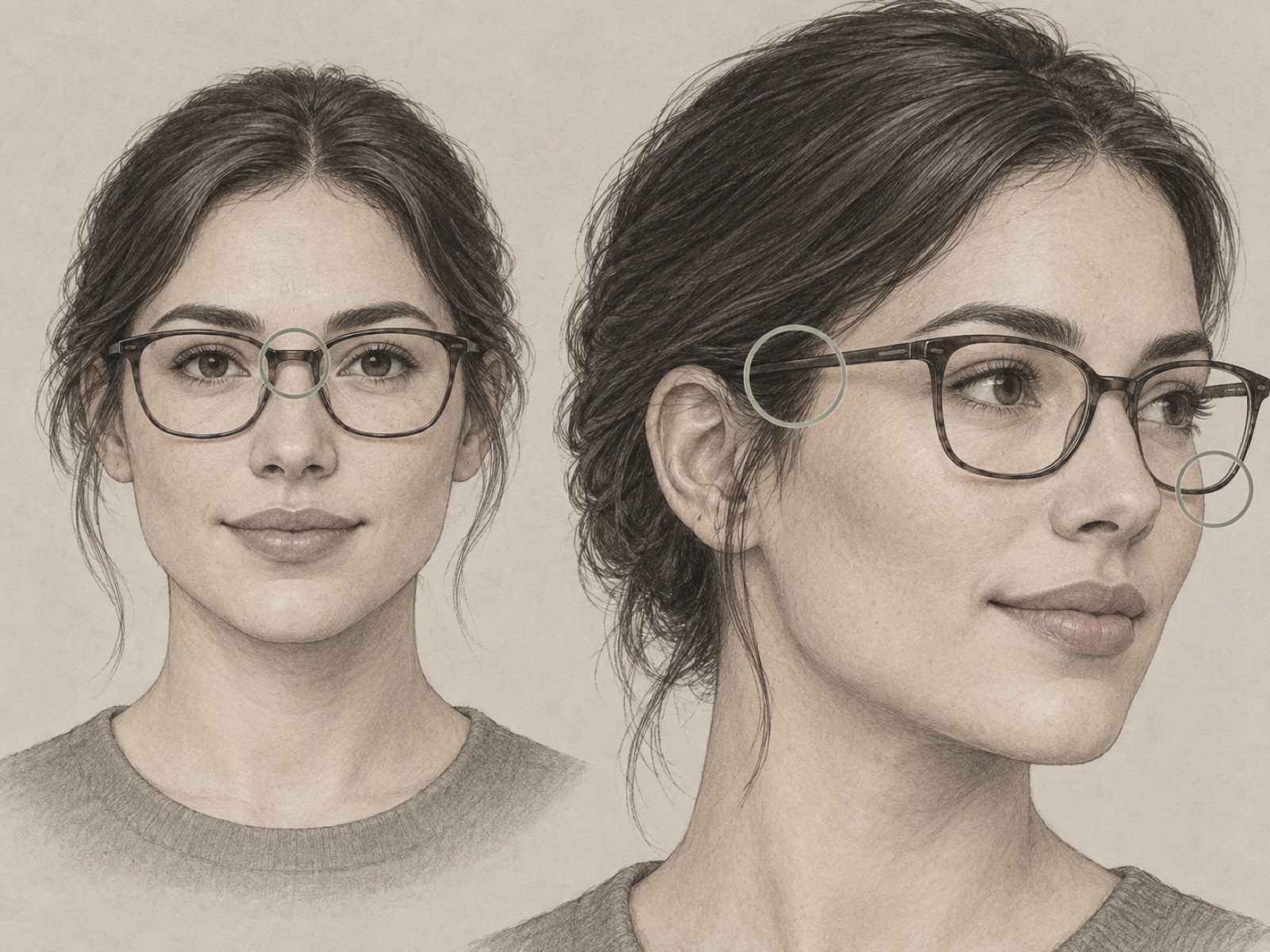
Low bridge fit is a frame-design option to compare if standard frames slip or touch the cheeks; it is not a conclusion to draw from a face-shape label or a person’s appearance. Ask an optician whether that design or a different frame addresses what you noticed during the try-on.
Do Not Infer Fit From a Shape Label
Two people described with the same face-shape word can have different bridge contact, ear positions, and comfort. A photo also cannot reveal pressure or how securely a frame stays in place. Treat the label as a way to compare visible outlines and test the actual fit separately.
Compare Frame Lines by Face Shape
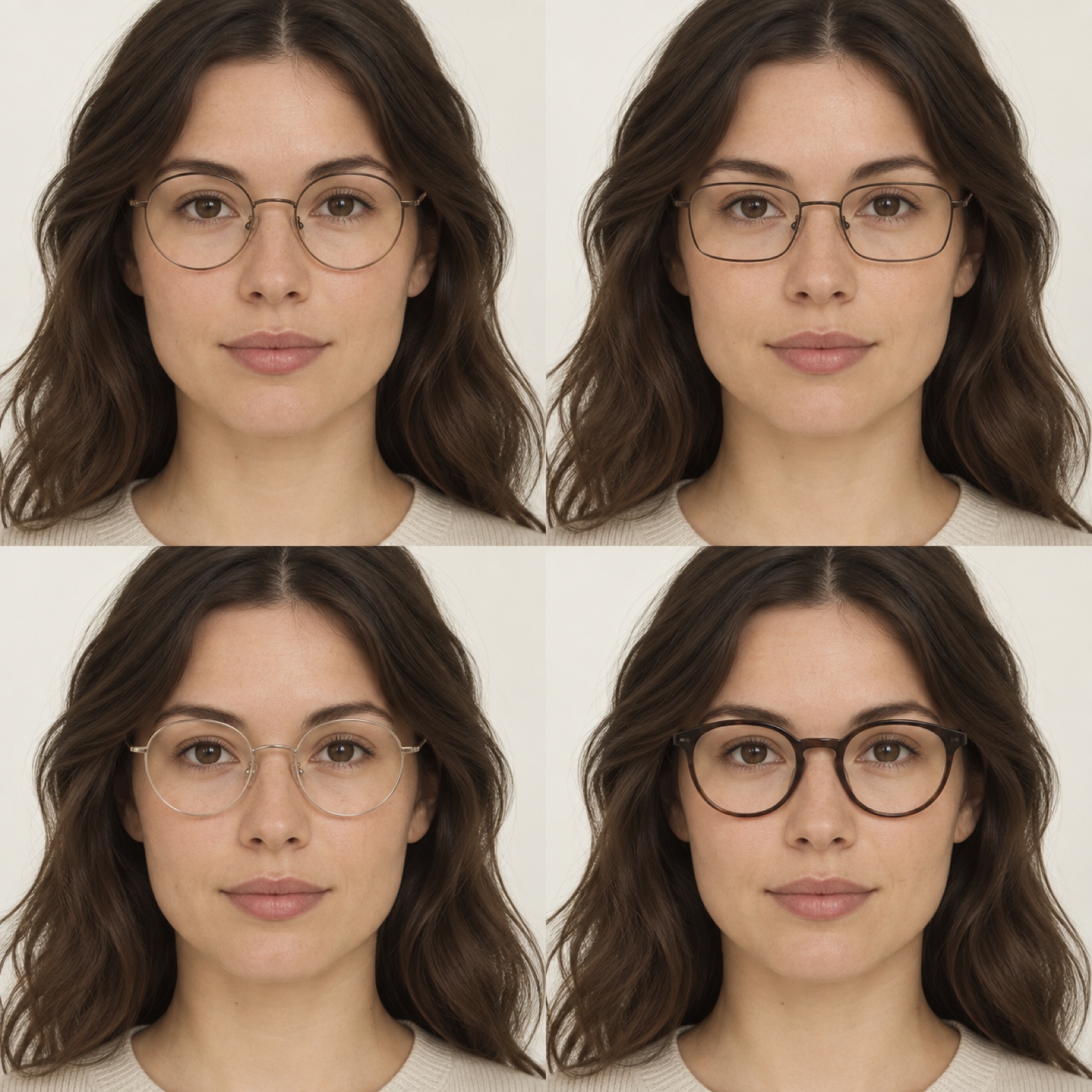
The descriptions below offer two visual directions for each shape: one repeats a visible line, and one contrasts with it. They are styling prompts, not rules about which frames someone can wear. Use the row that helps you compare, or combine rows if your visible proportions seem mixed.
| Visible shape description | Repeat a line | Try a contrast |
|---|---|---|
| Round | Echo a curved lower contour with a rounded frame | Compare a more angular or straight upper line |
| Square | Echo a visible jaw angle with a geometric outline | Compare a softer, rounded contour |
| Oval | Echo a gently tapered outline with a softly curved frame | Compare a more defined rectangular edge |
| Heart | Echo a broader upper outline with a more noticeable brow line | Compare a lighter upper rim or a softer oval |
| Oblong | Echo the longer visible outline with a taller, narrow-looking shape | Compare a stronger horizontal brow line |
| Diamond | Echo the wider cheek area with a frame that has a noticeable outer sweep | Compare a quieter, straighter upper edge |
A fine wire rim may draw less attention to the frame line; a bold acetate rim may make that line more noticeable. That is a visual hypothesis for your own comparison, not a measured effect or a promise about how you will look. Your preferred result decides which direction is useful.
Compare One Variable at a Time
First compare two outlines at a similar apparent width, such as rounded and rectangular frames. Then hold the outline roughly steady while comparing a fine rim with a heavier one. This simple method makes it easier to name what changed in your impression; it does not measure attractiveness or fit.
Try Two Frames in the Same Conditions
Try your two candidates in similar light with your head in a similar position. Look straight ahead and at a slight angle, then smile and move normally. Record the visual impression separately from bridge pressure, temple pressure, cheek contact, and slipping.
| Decision note | Frame A | Frame B |
|---|---|---|
| What I like visually | Outline or rim detail | Outline or rim detail |
| What feels uncomfortable | Bridge, temples, cheeks, or movement | Bridge, temples, cheeks, or movement |
| Question for the optician | What needs checking? | What needs checking? |
Pupillary distance (PD) is a separate measurement used in fitting lenses; it is not a face-shape classification. Ask an optician about lens requirements and measurements rather than treating this styling comparison as a prescription or measuring guide. The frame-fit source distinguishes PD from frame measurements.
Know What a Virtual Preview Cannot Tell You
An image can suggest how an outline might look in a particular view. It cannot tell you whether a bridge presses, a temple arm hurts, or the frame stays stable as you move. Use any visual preview as a reference for an in-person fitting, not as evidence of comfort.
Choose a Direction and Check It With an Optician
Bring the two frames and your notes to an optician. Ask which fit issues can be checked, and discuss any lens requirements with the professional responsible for your eyewear. If a pair feels wrong, do not keep it solely because its outline matches a table row.
If you wear bangs, the fringe and upper rim form neighboring lines in the same view. You can compare them together when trying frames; the bangs comparison guide can help you compare the front line. The face shape analyzer homepage links to the available guides, although photo analysis is not available in this preview.
If You Prefer an Unexpected Shape
Choose the outline you like if the real frame fits comfortably and meets your eyewear needs. A rounded frame on a round-looking face, or an angular frame on a square-looking face, can be a deliberate repeat rather than a mistake.
Questions About Frames and Fit
Can round faces wear round glasses?
Yes. A round frame can deliberately repeat a curved facial outline. Compare the specific pair’s look and fit rather than excluding it by label.
Can a photo tell me my bridge size?
This preview does not analyze photos or measure bridge size. Try the actual frame and ask an optician to check its fit.
Are sunglasses chosen differently?
Their visible dimensions may differ from everyday eyeglasses. Compare fit and appearance, and have their intended lens protection and use checked separately; a face-shape suggestion does not answer those questions.
Compare your two options: revisit the visible proportion guide if a shape term helps, then take your two-frame card to an optician.