If your cheekbones appear wider than your forehead and jaw, compare open sides with front pieces that sit near or below the cheeks. Neither is a rule. Choose the amount of framing you enjoy and check how the haircut behaves with your texture.
By the end, you can shortlist two looks and give a stylist a clear request about front-piece length and daily styling. A face photo cannot tell you how dense your hair is, where it naturally parts, how much it changes as it dries, or whether a fringe will stay in place.
Describe the Widest Visible Area
“Diamond” describes a visible outline in which the cheekbone area appears wider than the forehead and lower face. It is a styling description, not a diagnosis or a measure of attractiveness. Use it to notice where a haircut leaves the contour visible and where hair makes a new outer line. You can describe your face proportions before choosing a haircut.
Hair that flares at the temples can make the hairstyle look wide without telling you the width of the face underneath. If the hairline is covered, do not infer the upper outline. Camera angle, focal length, expression, and pose can also change how the visible contour appears in a photograph.
Allow More Than One Label
If the upper part of your face also looks relatively broad, compare the forehead-to-cheek relationship with the heart-shaped face guide. You do not need to settle a borderline label to decide whether you prefer an open temple area or loose pieces beside the cheeks.
Open the Sides or Keep Loose Framing
Tucking hair behind your ears reveals more of the temple and cheek-side contour. Leaving the same pieces loose places a hair line beside the cheeks instead. Neither treatment needs to conceal your cheekbones; choose which amount of openness you like. The broader guide can help you compare haircut options by outline, length, and upkeep.
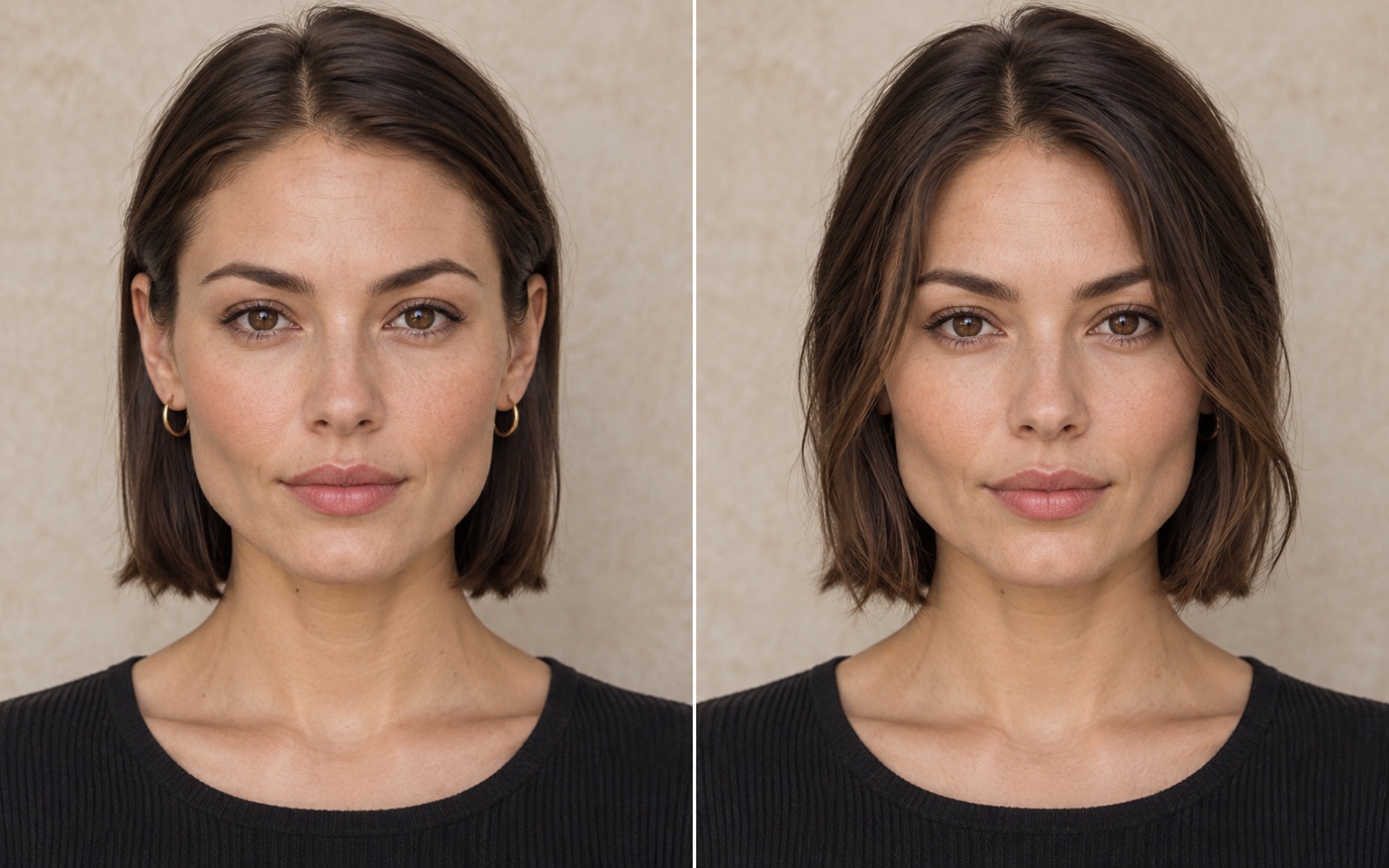
A short bob can keep the sides open when its front reaches behind the ears, but that depends on the cut and your hair. Longer front pieces offer another way to switch between an open and a framed look without changing the back length. In the illustration, the face and bob length stay the same so you can compare the placement of the front hair.
Test the Ear Tuck
Before asking for a cut, try tucking your current front pieces behind your ears. Check whether there is enough length for them to stay there during your usual day and whether they sit comfortably beside your glasses, if you wear them. Texture, growth direction, and movement may change the result after you let go.
Choose Where Front Pieces End
A piece ending near the cheek makes a short line beside the widest visible area. Below the jaw, its end sits lower along the face; near the collarbone, it becomes a longer line beside the neck and upper chest. These are positions to compare, not claims that one endpoint changes your face shape. Ask where each piece would fall on your hair when dry.
Use the same questions for each endpoint so you can compare what the cut would require in daily life.
| Front-piece endpoint | Visible hair line | Ask your stylist |
|---|---|---|
| Near the cheek | A short piece sits beside the cheek contour. | Where will it end dry, and will it stay back when I need it away from my face? |
| Below the jaw | The front edge continues past the lower face. | Can I tuck or gather it, and what happens after my normal drying routine? |
| Near the collarbone | The front edge falls beside the neck and shoulder. | Will the shortest piece join my usual tie-back, and how much will it move when dry? |
Check the Three-Quarter View
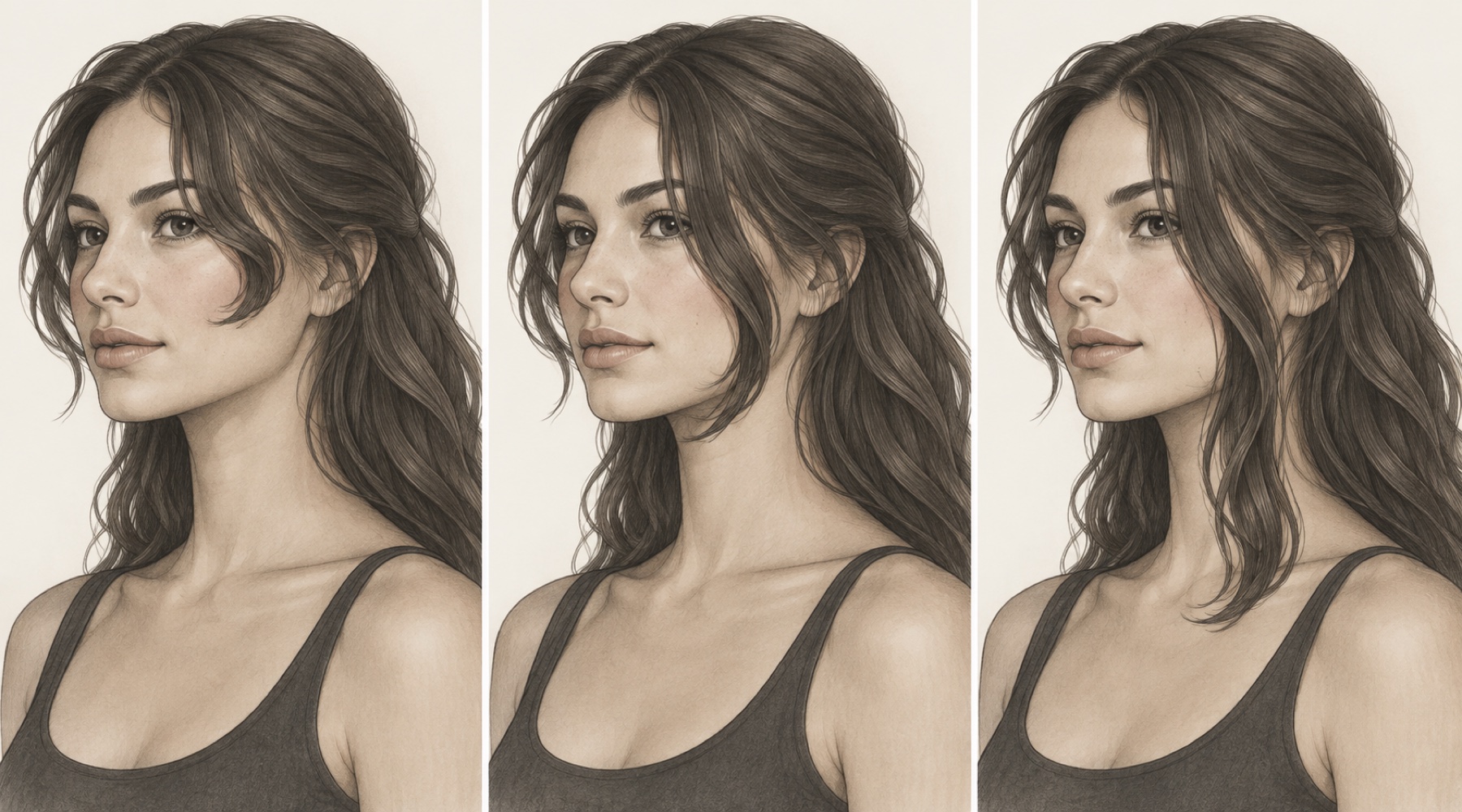
A front-facing reference may hide where the front piece meets the hair behind it. Compare a three-quarter view, then ask for a side view of the same cut. Point to the shortest front piece and the back perimeter separately so the stylist can explain both dry endpoints.
Compare Fringe With Your Glasses and Hairline
Curtain bangs split to either side, a full fringe forms a more continuous line across the forehead, and no fringe leaves more of the hairline open. A side-swept fringe travels diagonally toward one cheek; curtain pieces frame both sides. A professional haircut guide includes side bangs and curtain bangs among its diamond-face examples. Treat them as examples to try, rather than a requirement to create any particular outline.
Notice where the shortest fringe piece ends relative to your cheeks and, if you wear glasses, your usual frames. Try the parting and direction with those frames on: a strand may cross the top rim or meet a temple arm. A reference photo cannot establish your growth direction, density, or tolerance for resetting a fringe each morning. Use the bangs comparison guide to compare fringe options separately.
Keep Frame Fit in Its Own Guide
This check is about where hair and glasses meet. For the separate decision about how a frame sits on your face, use the glasses fit guide. A face-shape label alone cannot establish bridge fit or comfort.
Make a Framing-Focused Salon Brief
Describe how open you want the sides and where the shortest front pieces should end dry. Add whether you need to tuck them, clip them, or gather them with the rest of your hair. For example: “I like this open bob, but I need the front to stay behind my ears,” or “I want loose pieces that reach below my jaw when my hair is dry.”
Bring two references with texture close to your own and different amounts of cheek-side framing. Show the stylist both a front and a three-quarter view. Say which line you prefer and how you normally dry and wear your hair. A reference can clarify your goal, but it cannot guarantee the same fall or endpoint on your hair. The face shape analyzer is not available in this preview.
Ask What Needs Daily Restyling
Ask which parts of each reference come from the cut and which come from blow-drying, curling, or pinning. Then decide whether the look still appeals to you with the time and tools you actually use. That question is often more useful than deciding which face-shape label is most exact.
Questions About Choosing This Haircut
Should I hide prominent cheekbones?
No. Open sides can be the look you want. If you prefer loose framing, choose it for its hair line and feel, not because a visible feature needs hiding.
Can I wear a full fringe?
Yes. Compare its line with a parted or open-forehead option, then ask how your hair’s density and growth direction will affect the dry result and upkeep.
Compare your two options: use the haircut comparison guide to record each front-piece endpoint and styling question before your salon visit.