For a heart-shaped outline, compare how front pieces, open temples, and hair endpoints frame the face. You can keep the forehead visible or choose a fringe. Neither choice needs to hide a feature; start with the look and upkeep you prefer.
Use this guide to shortlist two options and describe them clearly to a stylist. Your hair’s dry texture, density, natural growth direction, and daily routine matter to that choice, but a face photograph cannot establish them.
Describe Width and Taper Without Ranking Features
“Heart-shaped” describes a visible outline that is broader across the upper face and tapers toward the chin. It is a description, not a diagnosis or an attractiveness rating. Camera angle, expression, pose, or hair can change what a single photo shows. You can describe your face proportions without forcing one exact label.
Decide how open you want the sides of your face to look and where you want the hair to end. You might like an exposed hairline and a short, distinct edge, or longer front pieces that move beside your cheeks. Neither direction requires hiding a forehead or making a chin appear different.
Keep Hairline and Forehead Separate
A widow’s peak is one possible hairline pattern, not a requirement for this outline. Hair may cover the hairline in a reference or photo; if so, do not fill it in from the face contour.
Open Temples or Front Framing?
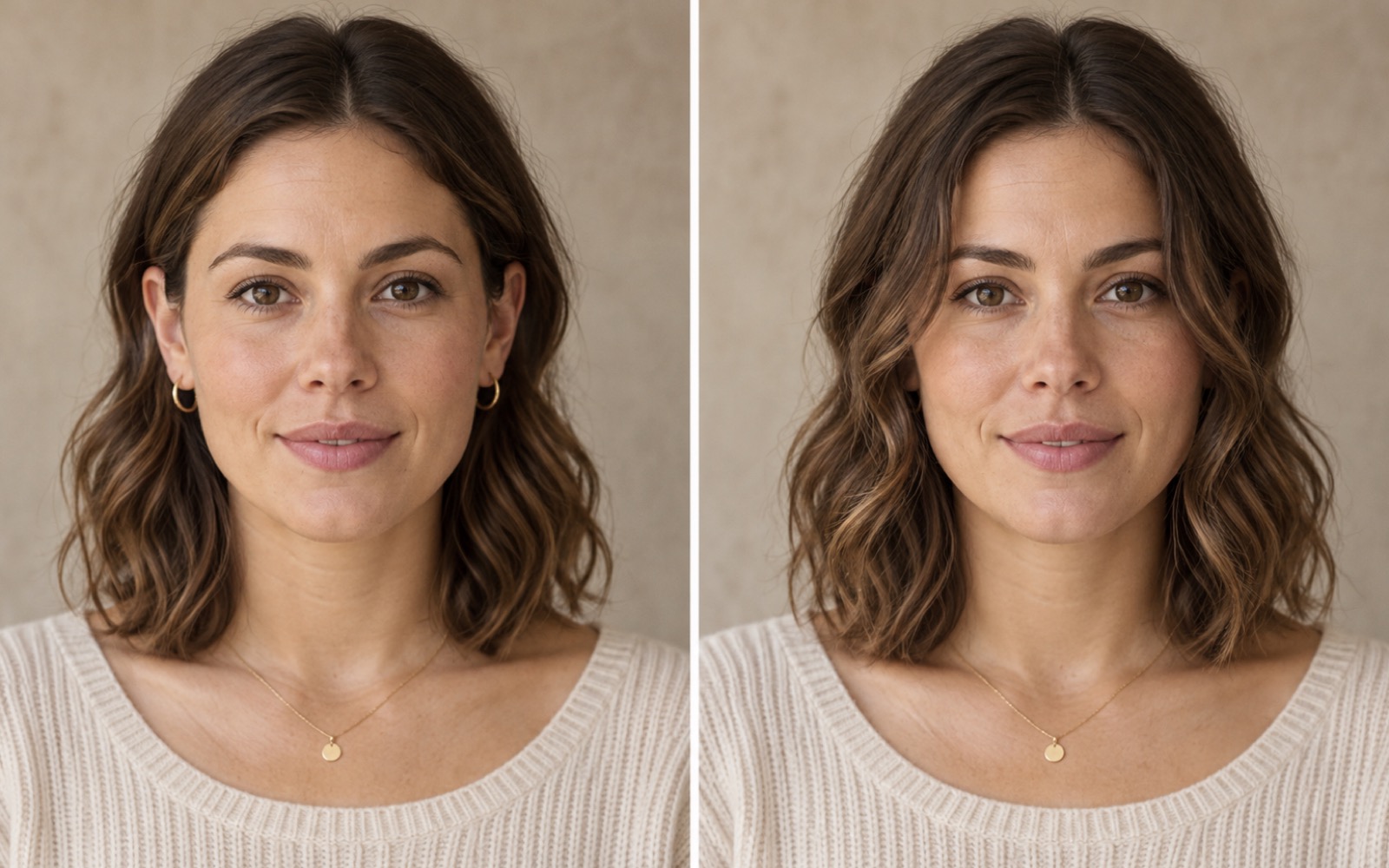
With the same shoulder-length cut, tucking the front pieces behind the ears leaves the temple-side contour and ears more visible. Wearing those pieces loose places hair beside the cheeks and changes how much of that contour is on show. This is a styling choice you can compare before changing the cut. The general guide can help you compare haircut options by length, outline, and upkeep.
Try each version while turning your head and wearing your usual glasses, if you use them. Notice whether the pieces stay where you want them, whether they cross the frames, and whether you enjoy the more open view. A clear view of the upper contour can be the look you want; it does not need correcting.
Use the Same Cut for a Styling Test
The illustration changes where the front hair sits, while the length and face stay the same. Tuck and release your own front pieces in similar light to test that difference. It shows an open-versus-framed look, not what a new haircut will do to your hair.
Compare a Chin-Length Bob With Longer Layers
A chin-length bob puts a clear end line beside the lower face and often leaves the neck more visible. Longer hair with front layers ending near the collarbones creates a lower front edge while keeping more overall length to gather. Check the dry endpoint of each option on your own texture; a cut name alone does not settle where its shortest piece will fall.
| Option | Visible edge | Neck and tucking | Ask about dry length |
|---|---|---|---|
| Chin-length bob | A distinct perimeter near the chin. | More neck remains visible; check whether the front stays behind your ears. | Where will the front and back edges end after my usual drying routine? |
| Long hair with collarbone layers | A longer perimeter with shorter pieces near the collarbones. | More neck is covered; check whether the shortest pieces join a tie-back. | Where will the shortest front piece end when dry? |
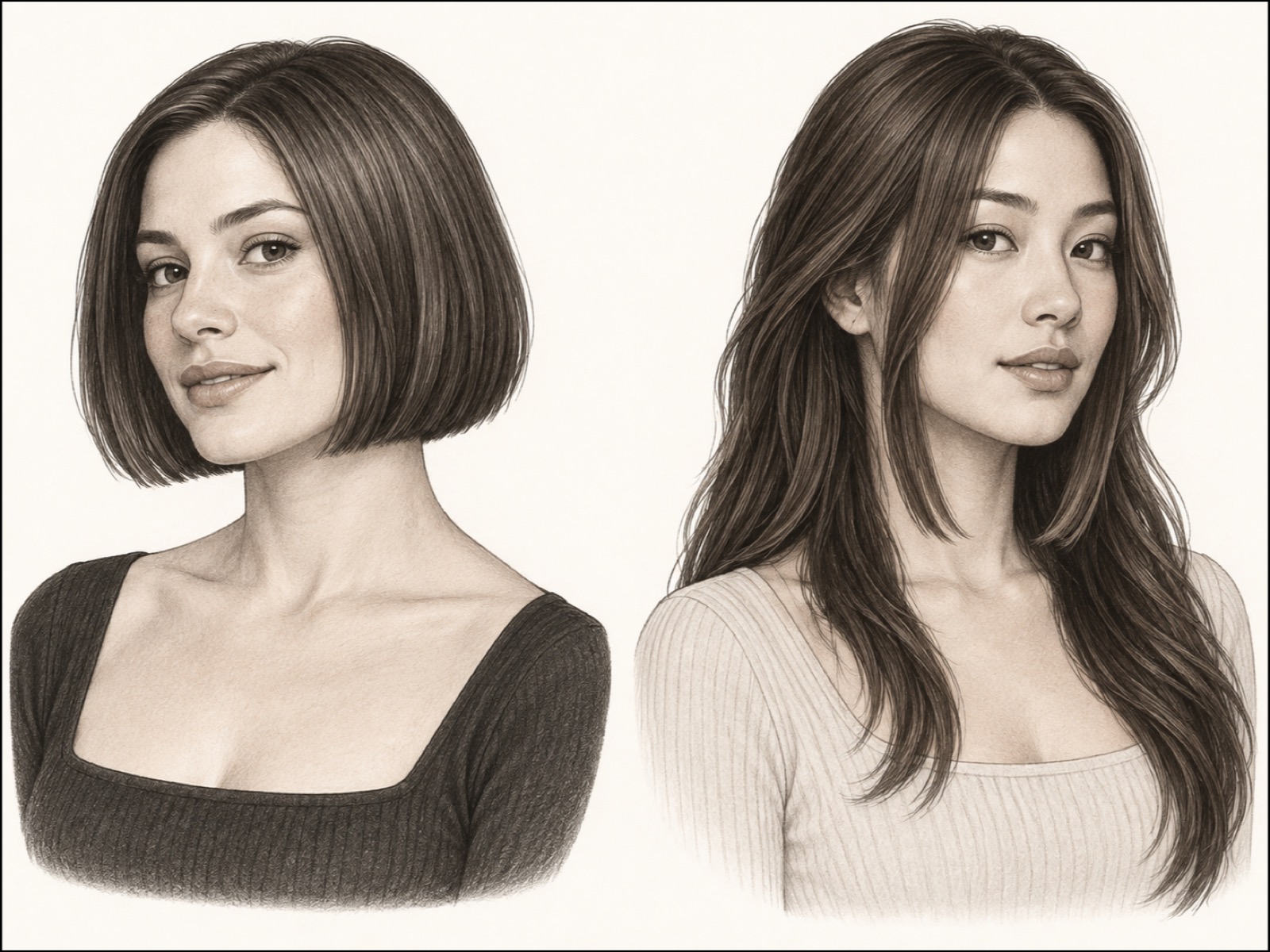
These references show different endpoints, not a physical change in face proportions or a guaranteed result on your hair. A professional haircut guide includes bobs, fringe, and front layers among its heart-face examples, and also calls out texture, density, and routine as practical inputs. Use those examples as choices to discuss, not rules to follow.
Ask Where the Shortest Piece Will End
The overall length may look long while a short front piece falls much higher. Point to both the full perimeter and the shortest front piece on a reference, then ask where each would sit on your dry hair and whether you could tuck or gather it as needed.
Fringe Is a Preference, Not a Requirement
A side-swept fringe draws a diagonal line across part of the forehead. A parted fringe puts pieces on either side of the center; no fringe leaves the hairline more open. Compare those lines for the look you enjoy, without treating bangs as a required way to reduce the appearance of any feature.
A photo cannot tell you your hair’s growth direction, how a fringe behaves after washing, how often you will restyle it, or whether it feels comfortable with glasses. Bring those questions to a stylist. Use the bangs comparison guide to keep the fringe decision distinct from the bob-versus-layers decision.
Plan for Hair Away From the Face
If you often need the front hair clear of your face, note whether you use clips or tuck it behind your ears. Ask whether the proposed fringe and shortest side pieces allow your usual routine. The right way to secure them depends on your hair and the cut.
Turn the Comparison Into a Salon Request
You could say, “I want a chin-length bob with the temple area open; please show me where the dry front edge will sit.” Or: “I want to keep my overall length, with loose front pieces that end near my collarbones when dry.” Each request names a visible edge and a framing choice instead of asking a shape label to choose the cut.
Use this compact card to compare your two references. You can deliberately choose an open style that emphasizes the taper, or a softer front line. Record what you prefer and what your hair actually does.
| Record | Option A | Option B |
|---|---|---|
| Dry perimeter and shortest front piece | Chin-length bob; confirm the front edge. | Longer perimeter; front pieces near the collarbones. |
| Temple area | Open, with hair tucked back. | Loose front framing. |
| Your texture and density | Describe how your hair falls when dry. | Note whether the same routine would work. |
| Upkeep | Ask what needs resetting or tucking. | Ask what can be gathered or clipped. |
Tell the stylist your hair’s density and the front edge you want. A face outline does not reveal whether a particular texturizing technique is appropriate; the stylist can assess your hair and discuss how to reach the shape and upkeep you described. The available guides are collected on the Face Shape Analyzer homepage; photo analysis is not available in this preview.
Check the Reference From the Side
Bring a side view of each reference, or ask the stylist to show one. It makes the edge behind the ear and at the neck easier to see than a front view alone. Confirm those endpoints before treating two similar front views as the same cut.
Questions About Choosing This Haircut
Do heart-shaped faces need bangs?
No. An open forehead is as valid a choice as side-swept or parted fringe. Choose the front line and daily upkeep you prefer.
Is a widow’s peak required for this shape?
No. “Heart-shaped” describes the visible contour in this guide; it does not require a particular hairline. If the hairline is covered, do not infer its shape.
Compare your two options: use the haircut comparison guide to record each endpoint and routine question before a salon consultation.